

Cook on the pan, not the coating
Hammered titanium, made for the meals you cook every day. Simple to use, simple to look after.
- Hammered titanium finish
- Stainless steel handles
- Glass lids on most pans
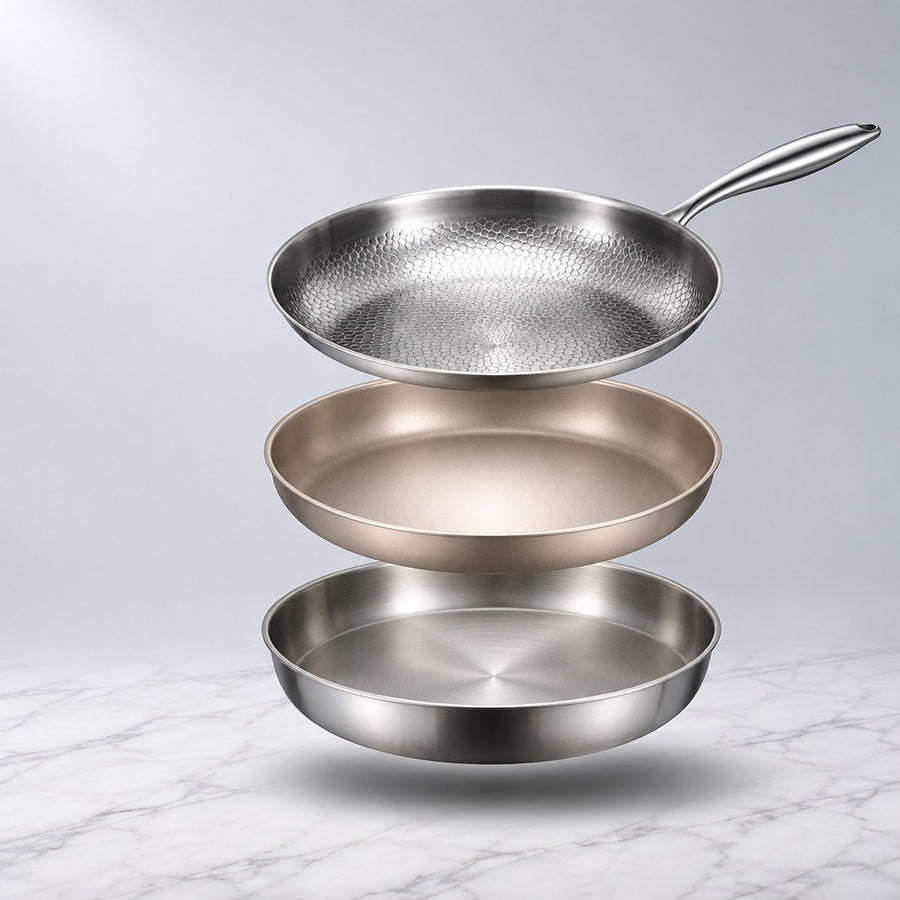
- Nothing sprayed onAn uncoated titanium cooking surface.
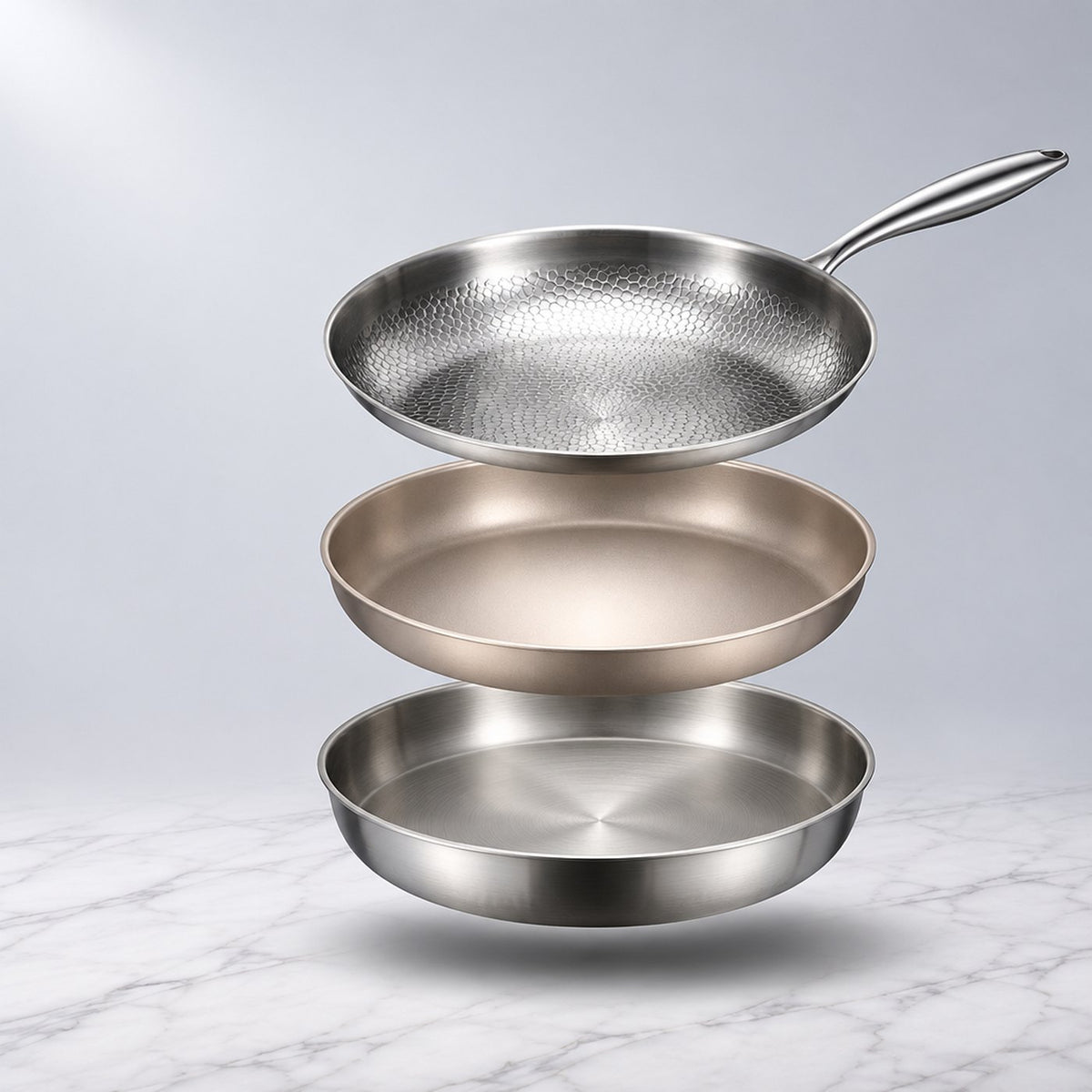
- Three-layer baseSpreads heat across the whole pan.
- Built to outlast coatingsNo layer to wear thin or flake off.
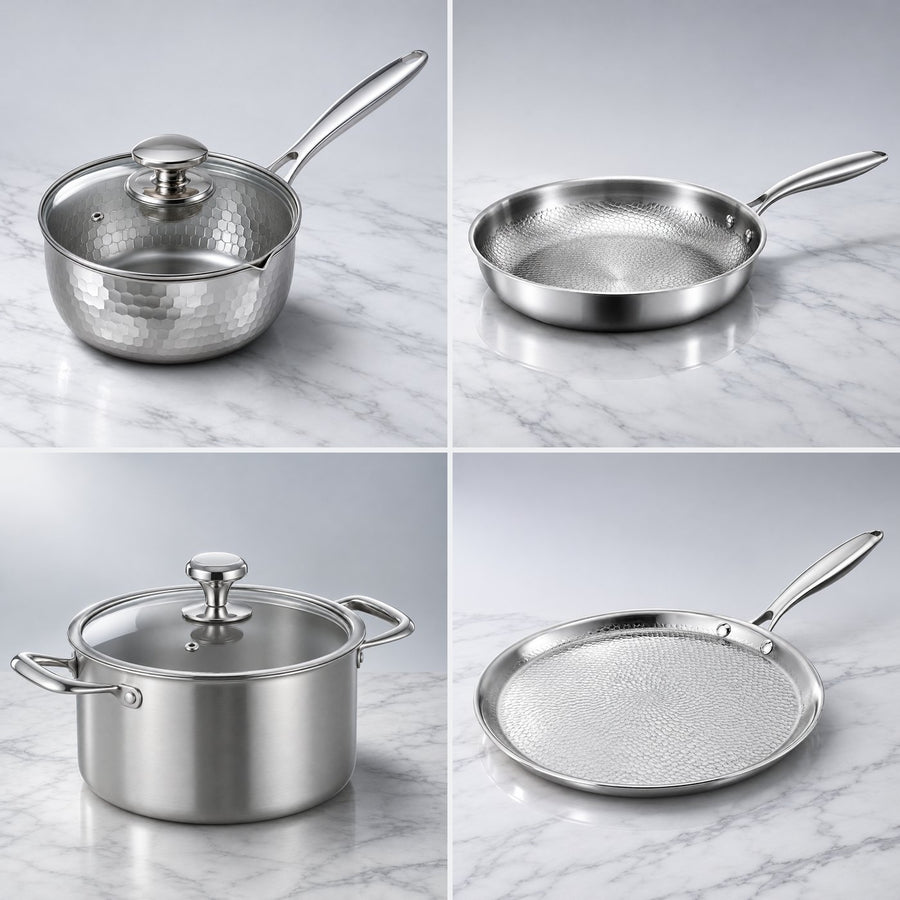
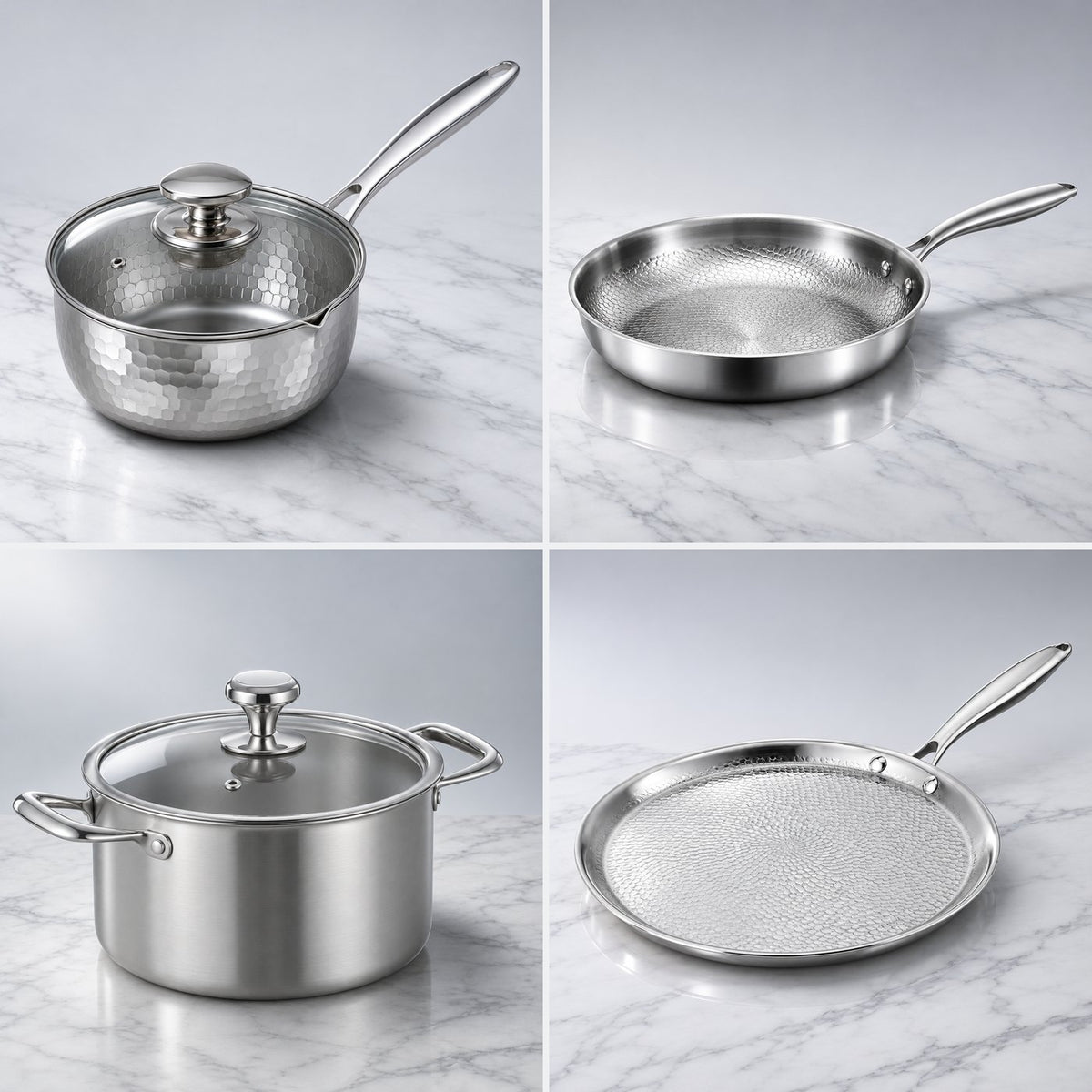
- A pan for every jobFrying, sautéing, stir-fry, stock and roast.
The pans people start with
Ten pans, one material. Start with the one you cook with most.
 The RoasterTitanium Roasting DishFrom £54.95View
 The SautéTitanium Sauté PanFrom £59.95View
 The Everyday PanUncoated Titanium Frying PanFrom £64.95View
 The WokTitanium WokFrom £64.95View
 The Gold-Handle PanTitanium Sauté PanFrom £69.95View
 The Family PanTitanium Casserole PanFrom £74.95View
 The Saucepan & SteamerTitanium SaucepanFrom £79.95View
 The StockpotTitanium StockpotFrom £94.95View
 The Milk PanTitanium Milk PanFrom £94.95View
 The Flat PanTitanium Pizza PanFrom £104.95View
Less to wear out, more to cook with
A coating is the first thing to go on most pans. Ours don't have one.
No coating at all
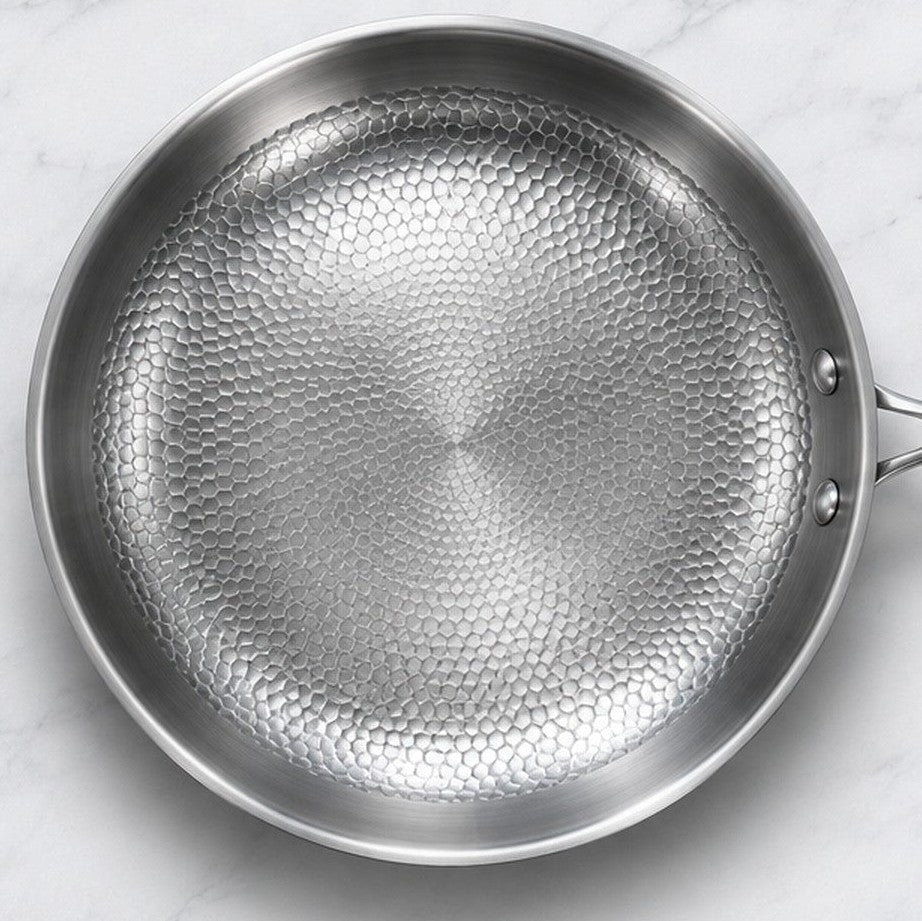
The cooking surface is uncoated titanium. There is no sprayed-on non-stick layer to scratch or flake.

Three-layer base
A layered base spreads heat across the pan, so food cooks evenly from the centre to the edge.
Simple to look after
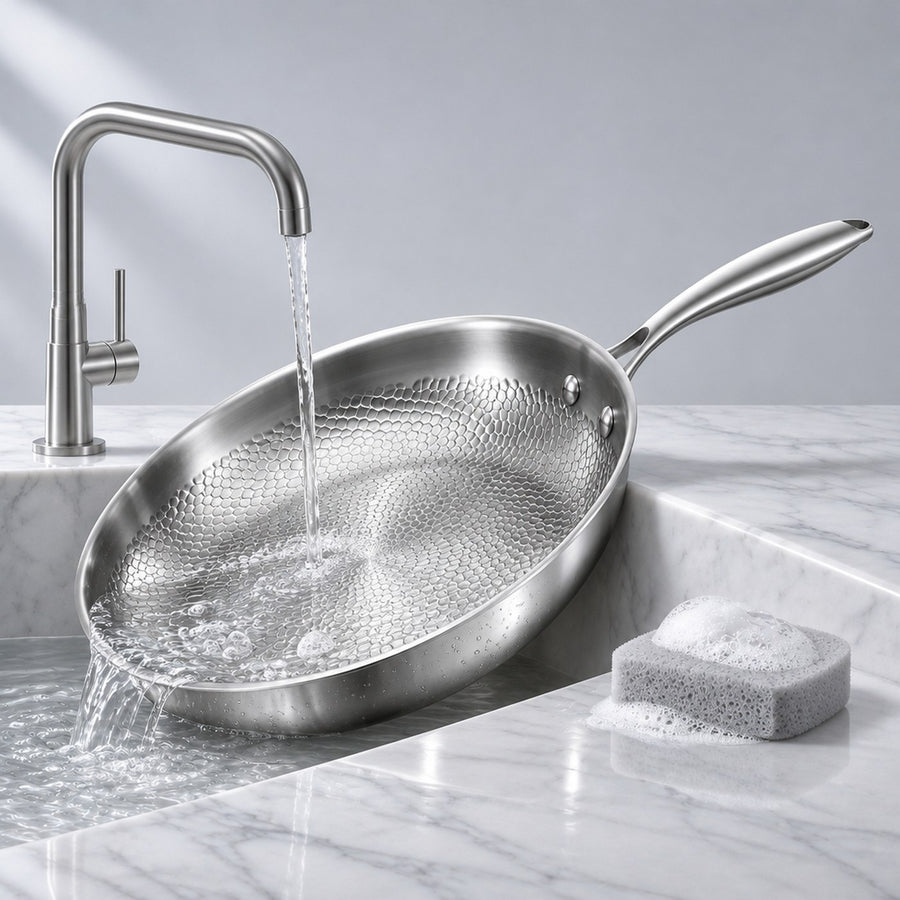
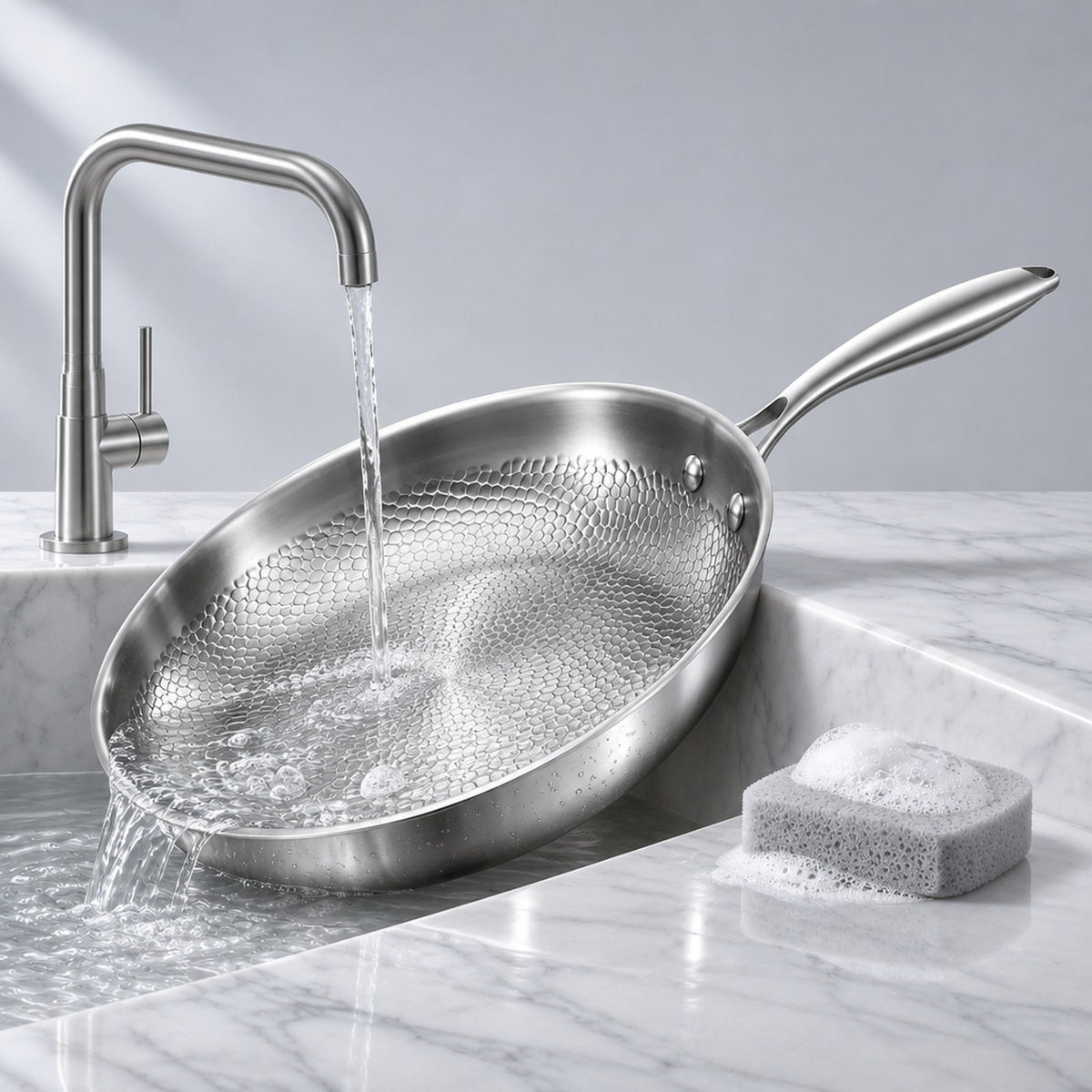
Warm water, a little washing-up liquid and a soft sponge. No seasoning routine.
A size for every job
From a 16 cm saucepan to a 40 cm flat pan, most pans come in several sizes.
How uncoated titanium compares
What you gain, and what you give up, with each type of pan.
 Titanium | Non-stick | Steel | Cast iron | Hybrid | Ceramic | |
|---|---|---|---|---|---|---|
| No coating to wear off | ✓ | × | ✓ | ✓ | × | × |
| Metal utensils welcome | ✓ | × | ✓ | ✓ | Partly | × |
| Sears at high heat | ✓ | Limited | ✓ | ✓ | Limited | Limited |
| Works on induction | ✓ | Often not | ✓ | ✓ | ✓ | Often not |
| No seasoning needed | ✓ | ✓ | ✓ | × | ✓ | ✓ |
| Won't rust if left wet | ✓ | ✓ | ✓ | × | ✓ | ✓ |
| Food releases easily | After preheating | ✓ | Needs practice | Once seasoned | ✓ | At first |
Made for real dinners
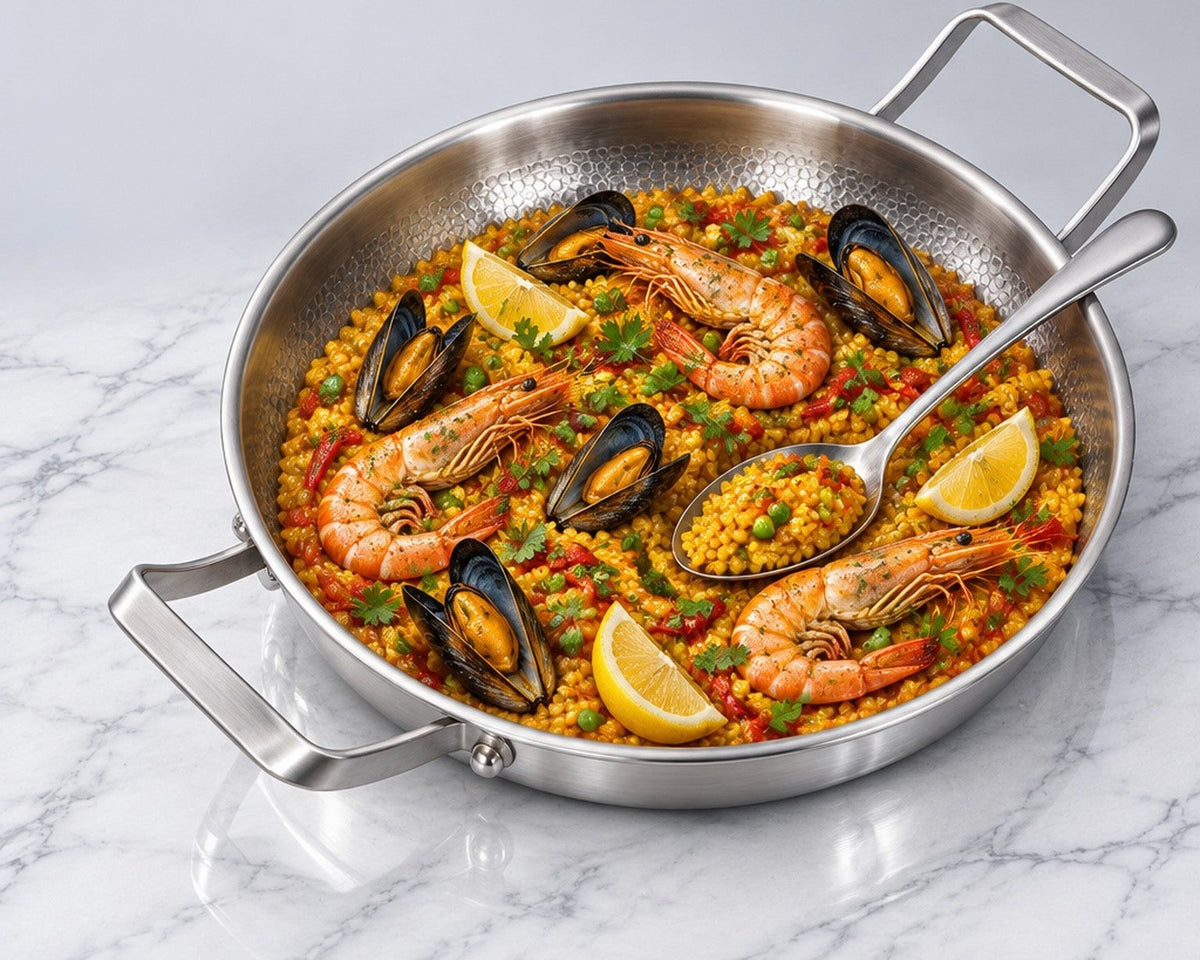
Paella for six on a Sunday, eggs for one on a Tuesday. Pick the shape you need, the cooking surface stays the same.
- Pans
- 10
- cm, small to large
- 18–30
- Layers in every base
- 3
Pan comparer
Switching from another pan?
Pick what you cook with now and see what changes.
 Coating wears thin
Coming from non-stick
Easy on day one. Then the coating goes.
Non-stick feels effortless when it is new. Heat and scratches wear the coating down, and food starts to catch where it has gone.
- Surface
- Sprayed-on coating
- Wears with
- Heat and scratches
- Over time
- Food starts to catch
- The coating wears down with use
- Metal utensils are off limits
- Usually replaced once it starts to peel
 Egg stuck to the steel
Coming from stainless steel
Great for searing. Hard on eggs.
Bare steel grabs onto eggs, fish and anything delicate. What stays behind is baked on, and the pan goes in the sink to soak.
- Surface
- Bare steel
- Food
- Grabs on
- Clean-up
- Soak and scrub
- Eggs and fish stick to the surface
- Burnt-on bits need a long soak
- Needs exact heat and plenty of oil
 Residue in the seasoning
Coming from cast iron
Holds heat. Holds on to food too.
Cast iron keeps its heat, but food clings until the seasoning is just right. You can't leave it to soak, so the leftovers get scraped out by hand.
- Surface
- Seasoned iron
- Weight
- Heavy
- Clean-up
- No soaking, scrape
- Food clings until it is well seasoned
- Leftovers have to be scraped out
- Heavy, and rusts if left wet
 Ends up in the sink
Coming from ceramic
Slick when new. Sticky when worn.
A ceramic coating is smooth at first. As it wears, food starts to catch, and the pan spends more time soaking than cooking.
- Surface
- Ceramic coating
- Wears with
- High heat
- Over time
- Food starts to catch
- Non-stick effect fades with use
- Food catches as the coating wears
- The coating can chip if knocked
 Uncoated titanium
With KitchenBuds
Food lets go. Nothing wears off.
An uncoated titanium cooking surface on a three-layer base. Preheat, add a little oil, and food lets go. There is no coating to wear thin.
- Surface
- Titanium, uncoated
- Base
- Three layers
- Clean-up
- Soft sponge
- No coating to wear off
- Food lets go once the pan is hot
- Washes up with a soft sponge
New to uncoated pans? Three steps.
Cooking without a coating is easy once you know the order.
- PreheatGive the pan a minute on a medium heat.
- Add a little oilA small splash once the pan is warm.
- Then the foodLet it sear before you move it. It releases when it's ready.
Made to be used every day
Not a pan you keep for best. One you reach for on a Tuesday night.
30-day returns
Not right? Send it back within 30 days.
Titanium surface
Uncoated, with nothing sprayed on.

Good questions
The things people ask us most.
What makes these pans different from regular non-stick?
There is no coating. The cooking surface is uncoated titanium, so there is nothing to scratch off or peel.
Does food stick without a coating?
Preheat the pan and use a little oil, the same way you would with any uncoated pan. Once it's hot, food releases easily.
How long does delivery take?
Orders to the UK usually arrive within 5–8 days. You'll get an email as soon as your order ships.
Where do you ship from?
Your order is sent directly from our partner warehouse in Asia. That's why delivery takes 5–8 days rather than next day.
Can I return my order?
Yes, within 30 days of delivery, if the pan is unused and in its original packaging. See returns for the steps.
Still have questions? Contact us →

Tips, recipes and new pans
An occasional email. Nothing you'd rather not get.
No spam. Unsubscribe anytime.